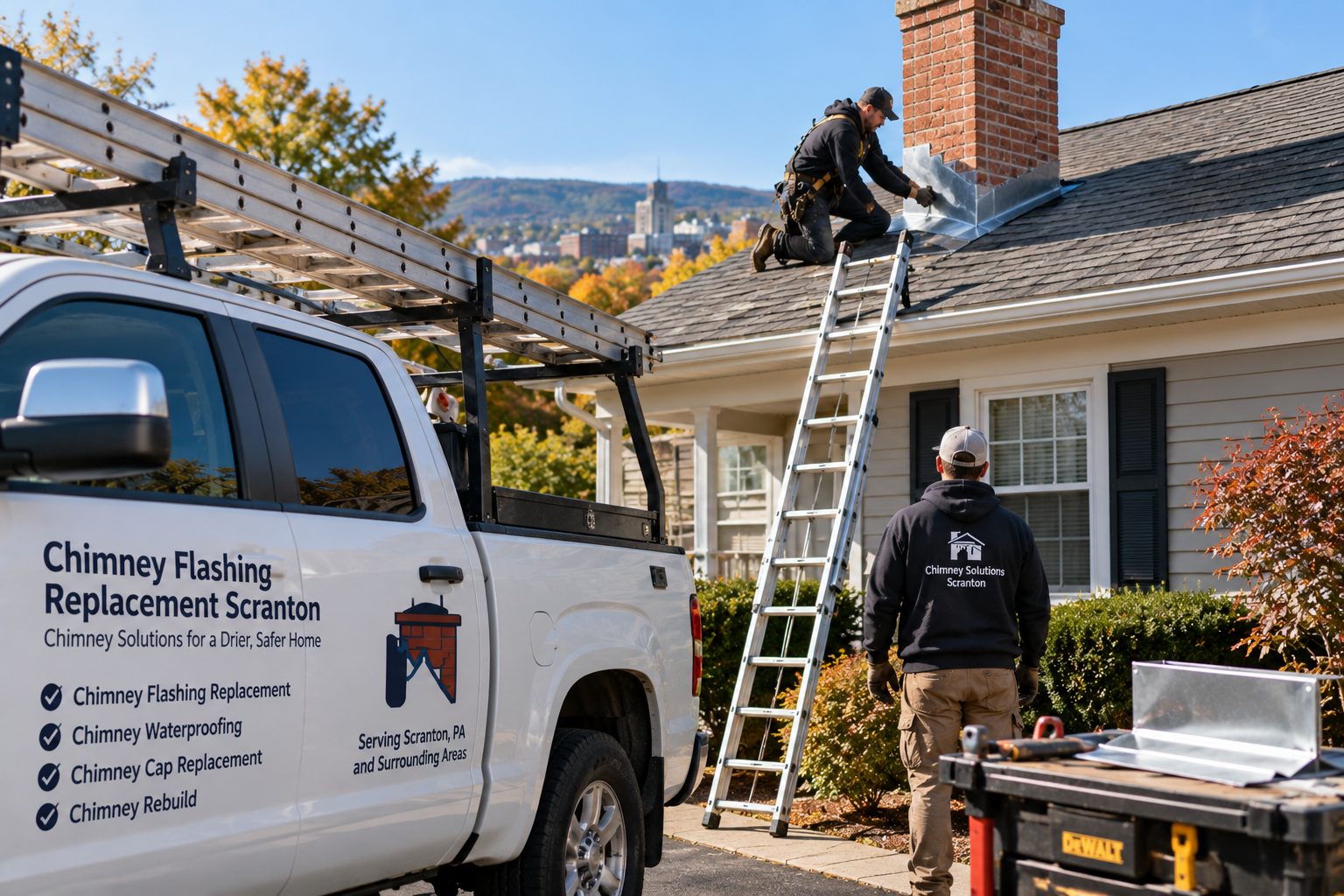
Local Chimney Flashing Specialists
Chimney Flashing Replacement in Scranton, PA
Concerned about a chimney leak? Get a Free Estimate
Local Chimney Flashing Specialists
Concerned about a chimney leak? Get a Free Estimate
When water gets around a chimney, the flashing is one of the first places worth investigating. Damaged, loose, poorly fitted, or aging flashing can let rain and melting snow work into the roof system and surrounding masonry. Chimney Flashing Replacement Scranton focuses on identifying flashing problems and providing practical repairs or replacement for homes in Scranton and surrounding Pennsylvania communities.
We keep the process straightforward. We look at the condition of the flashing and the areas around it, explain what needs attention, and recommend work based on the condition we find. If the problem also involves waterproofing, a damaged chimney cap, or more extensive masonry deterioration, we can address those related needs without losing sight of the original leak.
Our roots are in northeastern Pennsylvania, where older homes, changing seasons, heavy rain, snow, and freeze-thaw cycles can all put extra stress on roof and chimney details. The company was started by Michael Kowalski after years of hands-on roofing and masonry work around Lackawanna and Luzerne County homes. He saw how a small flashing problem could become a much larger water issue when it was ignored.
Today, the focus remains simple: do careful work, communicate clearly, and treat the home as if it were our own. We serve Scranton and selected communities across the region, helping homeowners deal with chimney flashing and the related exterior problems that can allow water into a home.
More about us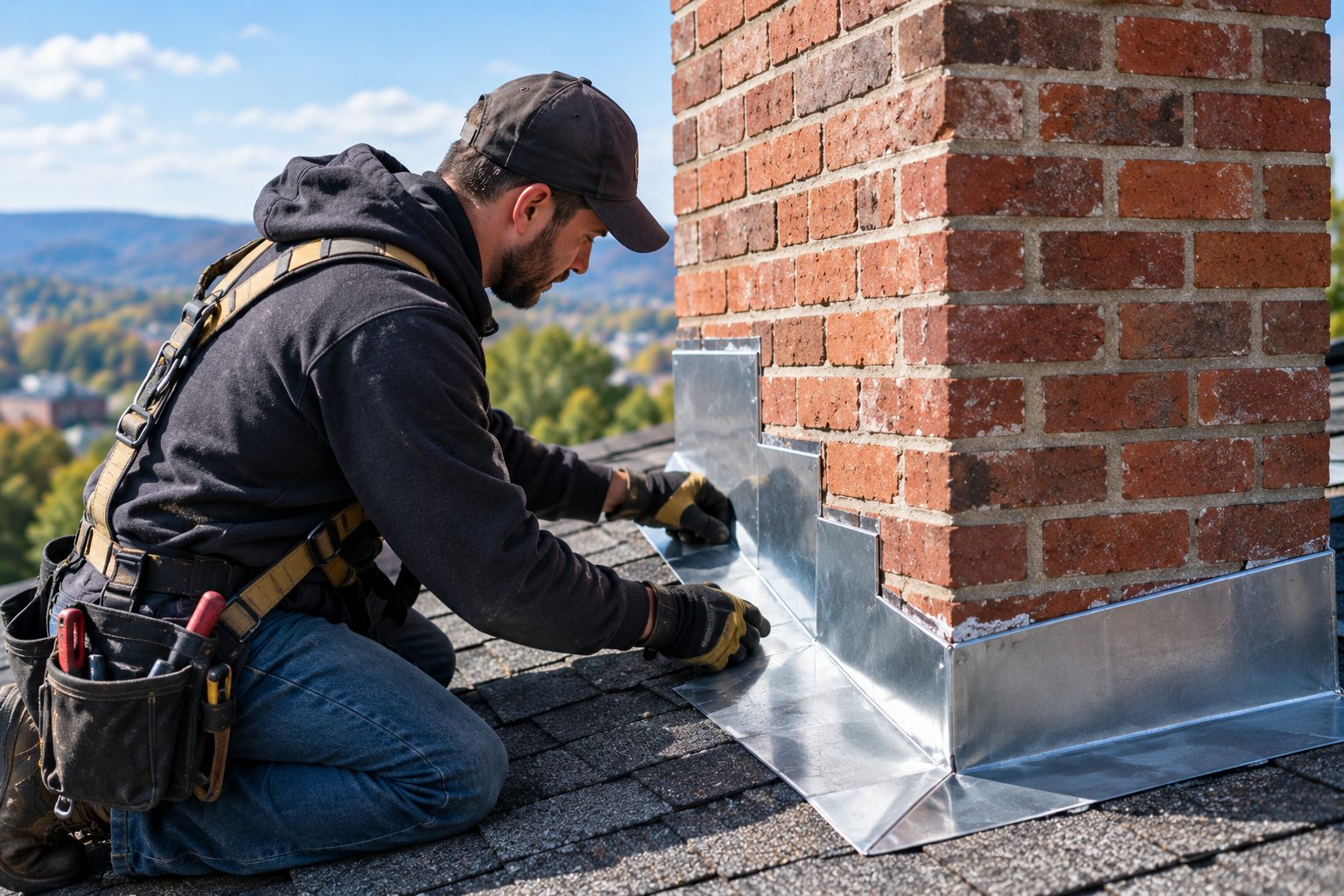
Our main work centers on chimney flashing replacement, with related services for homeowners who need broader chimney protection or repair.
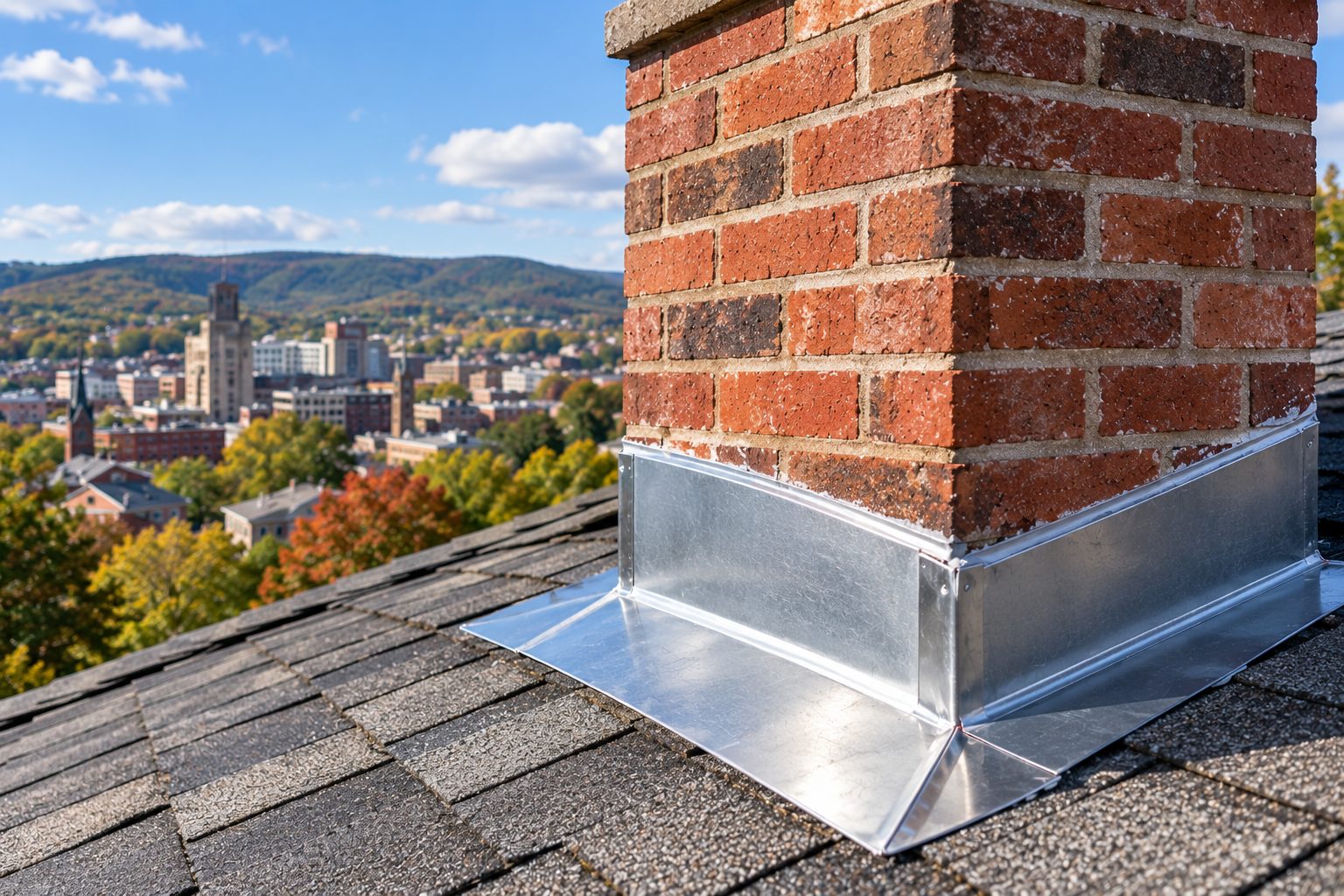
Replace failing chimney flashing to create a more dependable water-shedding connection between the chimney and roof.
Learn more →Help protect chimney masonry from moisture with targeted waterproofing suited to the condition of the chimney.
Learn more →Replace a damaged or failing chimney cap to improve protection at the top of the chimney.
Learn more →Rebuild deteriorated chimney sections when masonry damage has progressed beyond practical repair.
Learn more →We provide service in Scranton and nearby towns including Tunkhannock, Mountain Top, Waymart, and Tobyhanna. Local conditions vary from property to property, so we consider the roof, chimney, masonry, and existing flashing together rather than treating every chimney as the same.
If you are seeing staining near a chimney, damp masonry, damaged metal, or signs that water is getting inside after rain,
to discuss the problem. We can help you understand whether the flashing is likely to be the source and what type of work may be appropriate.See all service areas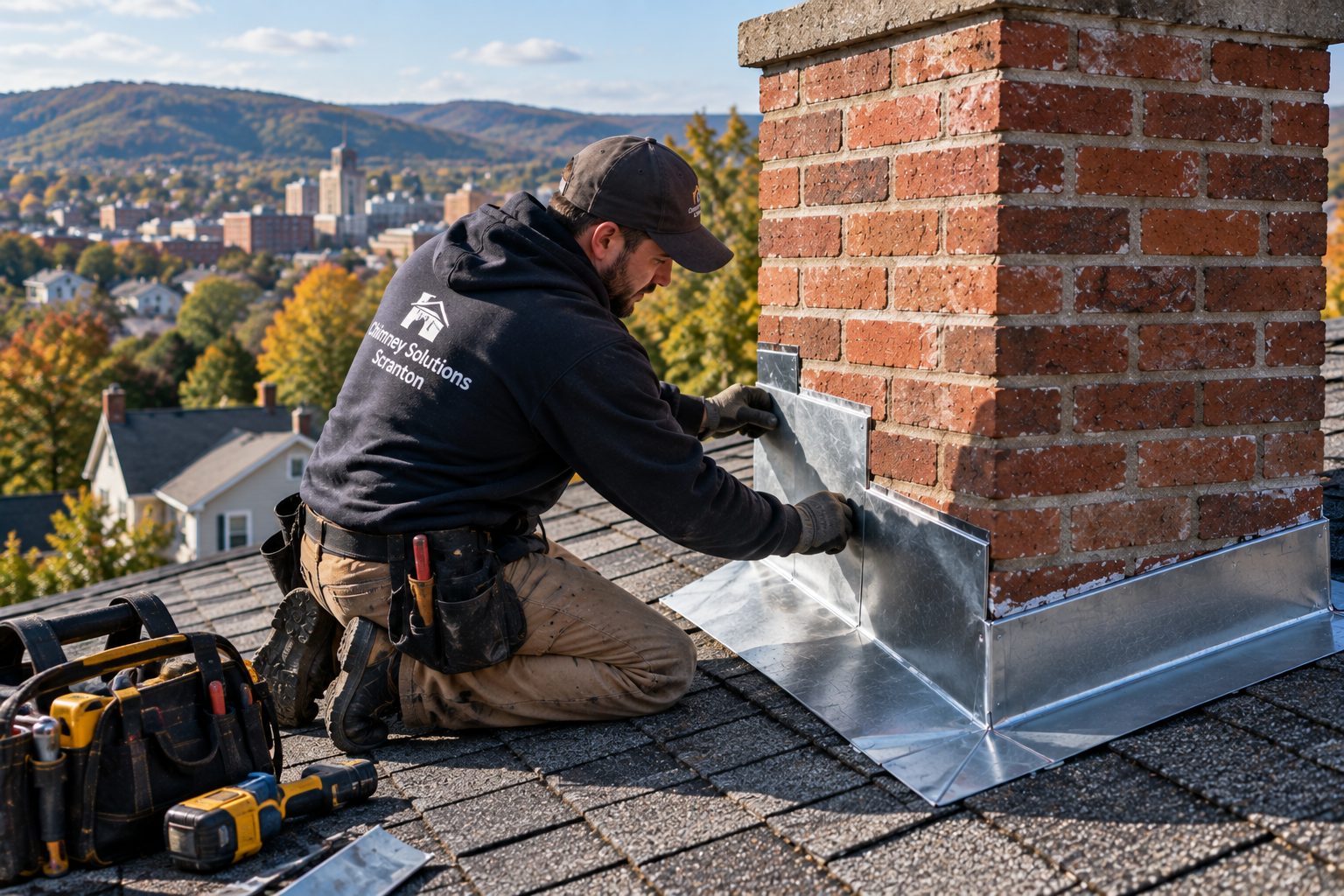
We build our work around chimney flashing because the connection between masonry and roofing needs careful attention to shed water properly.
We explain what we find in plain language and focus on the work that actually addresses the condition of the chimney and roof.
Our Pennsylvania background means we understand the repeated rain, snow, ice, and freeze-thaw conditions that can challenge exterior chimney details.
When flashing is only part of the problem, we can also help with waterproofing, chimney caps, and rebuild work.
Visible rust, bent or separated metal, cracked sealant, loose flashing, or water staining near the chimney can all be warning signs. A flashing problem is especially worth investigating when leaks appear after rain or snow.
The price depends on the chimney size, roof configuration, accessibility, existing flashing, and whether masonry repairs are needed. We recommend assessing the actual condition before treating a generic price as an estimate.
Sometimes a limited repair is appropriate when the flashing is generally sound and the problem is isolated. If the metal is badly deteriorated, incorrectly installed, or no longer providing a reliable water-shedding detail, replacement may be the better long-term option.
Yes. Chimney flashing forms a water-shedding transition between the chimney and roof, so failures in that area can allow water into the roof assembly or nearby interior spaces.
If your chimney is showing signs of water intrusion, and tell us what you have noticed.
Free — no obligations